2026.06
11
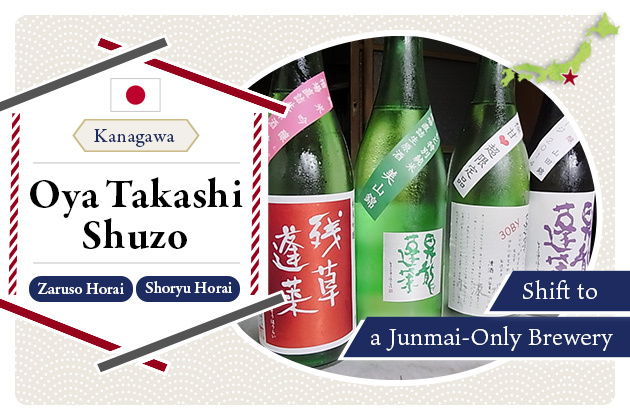
Grounded in Kanagawa: The Gradual Shift to a Junmai-Only Brewery at Oya Takashi Shuzo
Founded in 1830, Oya Takashi Shuzo is located in Aiko District, Aikawa Town, in the northwestern part of Kanagawa Prefecture. Since 2009, the brewery has committed to producing sake made without the addition of distilled alcohol, and today operates with a clearly defined focus. Its portfolio is organized around two core labels, Zaruso Horai and Shoryu Horai, each representing a distinct brewing method and stylistic orientation.
The Oya family's connection to this region predates the founding of the brewery itself. Historical accounts suggest that their ancestors first settled in the area in the sixteenth century. Over generations, the family became closely involved in the development of the local community, including during the period when Aikawa functioned as a center of silk production. In this sense, the brewery is not an isolated enterprise but part of a longer continuum of regional economic and social activity.
We spoke with Shunsuke Oya, the eighth-generation owner and head brewer (toji), about the path that brought him back to the family business and the principles that now shape its direction.
How an Unlikely Heir Became a Master Brewer
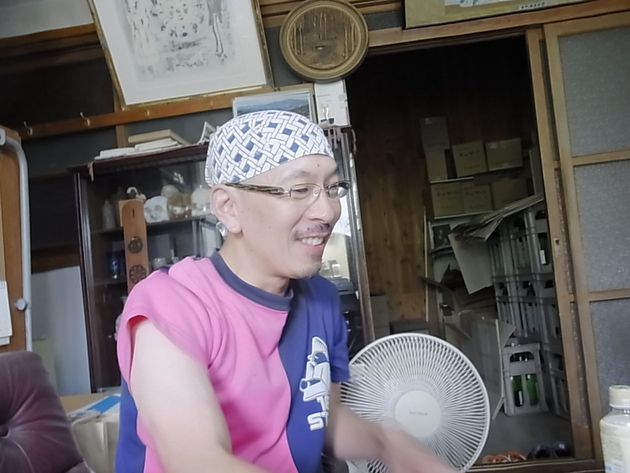
Oya's early relationship with the brewery was defined more by distance than familiarity. As a child, he was actively discouraged from entering the production space due to safety concerns: hot equipment, open tanks, and other hazards made it unsuitable for casual exposure. As a result, the brewery remained, in his words, "a place apart," rather than a natural extension of daily life.
The family maintains a formal naming convention, alternating the names Zenzaemon and Ichiemon across generations. Despite this structured lineage, Oya grew up without a strong expectation that he would inherit the role. By his own assessment, it is likely that the previous generation had already begun to accept the possibility that the brewery might not continue indefinitely.
After pursuing a career outside the sake industry, Oya returned in his late twenties following his father's sudden illness. The decision was not initially driven by personal ambition. "I came back out of necessity," he recalls. "But gradually, the work itself became compelling."
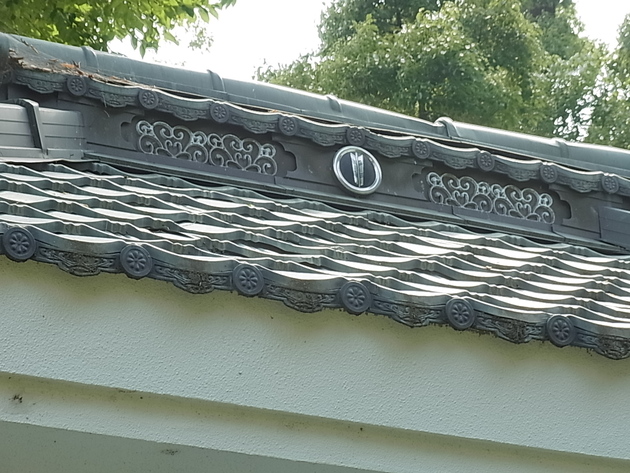
At the time of his return, brewing operations were still led by craftsmen from the Echigo toji guild in Niigata, one of Japan's most historically prominent brewing lineages. Over time, as these brewers aged and began to retire, Oya assumed increasing responsibility. New hires were drawn from the local area, and the production system gradually shifted away from reliance on external guild labor. When the final remaining guild-affiliated brewer, a veteran of more than three decades, retired, Oya formally took on the role of toji.
Following the Market to Junmai
Today, Oya Takashi Shuzo produces approximately 500 koku per year, equivalent to about 90,000 liters, and is widely recognized as a brewery focused exclusively on sake made without added alcohol. This identity, however, did not emerge from a predefined ideological position.
At the time Oya assumed leadership, roughly 90% of production consisted of futsushu and honjozo. Rather than implementing an abrupt shift, he adjusted the lineup incrementally, expanding products that demonstrated strong demand while reducing those that did not. Over time, this iterative process resulted in a portfolio composed entirely of junmai styles.
Oya is careful not to frame this transition as a rejection of other brewing methods. "There are excellent examples of sake made with added alcohol," he notes. "The category itself is not the issue. Quality is."
Two Labels, Two Philosophies: Zaruso Horai and Shoryu Horai
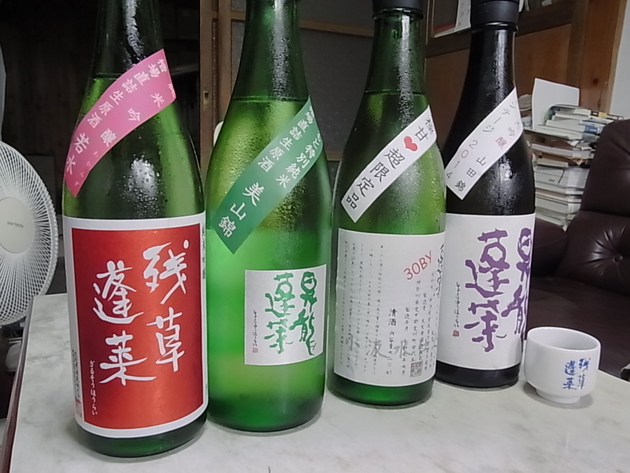
Zaruso Horai, the brewery's original label, derives its name from the historical district of Zaruso and Horai, the mythical mountain of immortals in East Asian tradition. It is produced using the sokujo method, a modern yeast starter technique that allows for greater control and consistency.
Achieving the desired balance required sustained experimentation. Oya tested a wide range of yeast strains designated by the Brewing Society of Japan, each producing different aromatic and structural outcomes. A recurring constraint was the brewery's aging koji facilities. Limitations in environmental control often extended the koji-making process beyond optimal timing, increasing amino acid levels and occasionally resulting in a coarser flavor profile.
Through repeated trials, Oya determined that Yeast No. 7 was particularly well suited to these conditions, consistently yielding a balanced composition. Today, Zaruso Horai is produced using a non-foaming strain of this yeast. At the same time, foam-producing strains are still used in training contexts, allowing new brewers to observe fermentation behavior more directly.
In 2011, Oya introduced Shoryu Horai, a label produced using the kimoto method. This traditional approach relies on a more complex microbial process to develop the yeast starter and requires significantly greater labor and precision.
Oya's decision to pursue kimoto was not without hesitation. He recalls being advised against it by the late Hiroshi Uehara, a highly influential advisor, who emphasized that modern methods such as sokujo were developed to address the instability inherent in older techniques. Nonetheless, Oya chose to proceed, viewing the challenge as an opportunity to expand the brewery's range.
To support kimoto production, the brewery undertook extensive upgrades to its sanitation systems. These included the introduction of ozone-treated water for cleaning and ozone sterilization in refrigerated storage areas. Ozone was selected based on its ability to decompose into oxygen without leaving chemical residues, and its effectiveness in certain microbial control applications.
Hygiene protocols were also reinforced at the level of individual handling. When working with steamed rice or koji, staff use disposable gloves over sanitized hands, reducing the transfer of ambient microorganisms. This helps mitigate the formation of phenolic off-aromas, such as clove-like notes associated with compounds including 4-vinylguaiacol.
Within this controlled environment, Oya aims to produce a kimoto sake characterized by structural depth and the capacity to evolve when gently warmed, a quality referred to as kan-agari.
Rooted in Kanagawa: A Local-First Vision
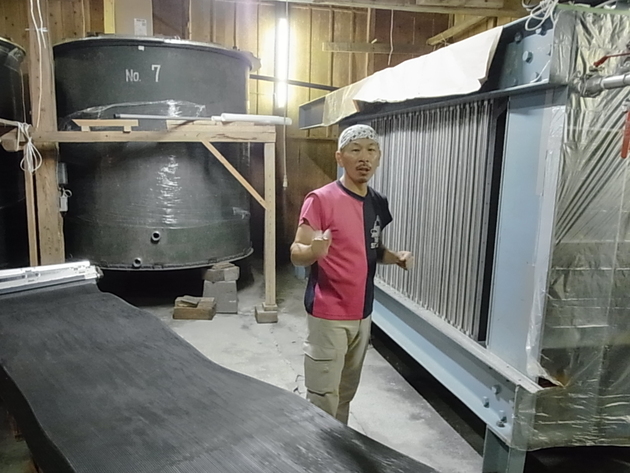
While many breweries have sought growth in overseas markets in response to the long-term decline in domestic sake consumption, which has continued since its peak in 1973, Oya Takashi Shuzo has taken a more grounded approach.
The brewery does export to markets including the United Kingdom, France, China, Hong Kong, and Singapore. Yet for Oya, the primary focus remains domestic, and more specifically, local.
He points to a structural imbalance. Kanagawa is one of Japan's most populous prefectures, yet every brewery within it produces under 1,000 koku annually. More strikingly, over 98% of the sake consumed in Kanagawa is produced outside the prefecture. For Oya, this is not a sign of saturation, but of untapped potential.
"I only conduct sales outreach within Kanagawa," he says. The intention is explicit: to build a stronger base of local consumption before looking outward. Underlying this approach is a clear priority, to create sake that is rooted in, and embraced by, the community in which it is made.
Oya's thinking extends beyond brewing technique to the broader relationship between sake and agriculture.
"When there's a truly good sake in front of you, people naturally want a proper meal to go with it, something prepared with care. And in that context, whether it's meat or vegetables, attention tends to turn toward domestic ingredients. Strengthening primary industries such as agriculture is what ultimately makes Japan stronger."
Eleven years have passed since the brewery shifted entirely to sake made without added alcohol. Because this style requires a greater volume of rice, Oya sees it as one way to provide tangible support to rice producers.
Some breweries have chosen to grow their own rice, but Oya has deliberately taken a different path. There are practical constraints: rice cultivation requires years of adaptation to local soil conditions, making stable yields difficult to achieve. More fundamentally, his view is that rice should be grown by specialists. His role, as he sees it, is to support them through consistent purchasing.
This philosophy is reflected in the brewery's procurement practices. Oya Takashi Shuzo maintains contracts with its partner farmers that commit to purchasing rice up to three years in advance, regardless of annual harvest conditions.
The brewery works with several rice varieties, with Yamada-nishiki, Miyama-nishiki, and Dewa Sansan forming the core. To mitigate the risk of crop failure or natural disasters, sourcing is diversified across multiple regions.
Among these, Oya speaks with particular regard for Yamada-nishiki grown in Tokushima Prefecture. His connection to the region began during a visit alongside the team from Shinkame Shuzo, a brewery that significantly influenced his own approach. He was struck by the level of agricultural guidance and coordination provided to farmers there. Today, he continues to visit the fields several times a year, observing the growth and condition of the rice firsthand.
Sake for Everyone: Accessibility Without Compromise
Oya also places emphasis on accessibility. One persistent barrier for new consumers is the complexity of sake labeling, particularly distinctions such as nama, nama-chozo, and nama-zume, which are difficult for most shoppers to differentiate.
To address this, the brewery has simplified its labeling into two primary categories: nama genshu (unpasteurized, undiluted) and hi-ire (pasteurized). The goal is to reduce the complexity consumers face at the point of purchase, without compromising production quality.
This approach extends to product naming. One low-alcohol sake, bottled at 12% ABV, is named "Queeen," an intentional reference to the Queen playing card, which carries the number 12. The name reflects an effort to make the lineup more approachable and memorable, while retaining a sense of wit.
Oya Takashi Shuzo's current identity is the result of accumulated decisions rather than a single guiding doctrine. Each initiative, from the shift to junmai, to the introduction of kimoto brewing, to the simplification of labels and the commitment to local agriculture, reflects the same underlying logic: adapt steadily, engage deeply with the local community, and let quality speak for itself.
Brewery Information
Oya Takashi Shuzo
Address: 521 Tashiro, Aikawa-machi, Aiko-gun, Kanagawa Prefecture, Japan
Phone: +81-46-281-0028
Founded: 1830
President and Head Brewer: Shunsuke Oya
Brewery Website: https://oyatakashi-shuzo.com/
Pickup Articles


2019.01.18

2019.01.25
Trending Articles


Popular Articles
Recent Articles