2026.07
30
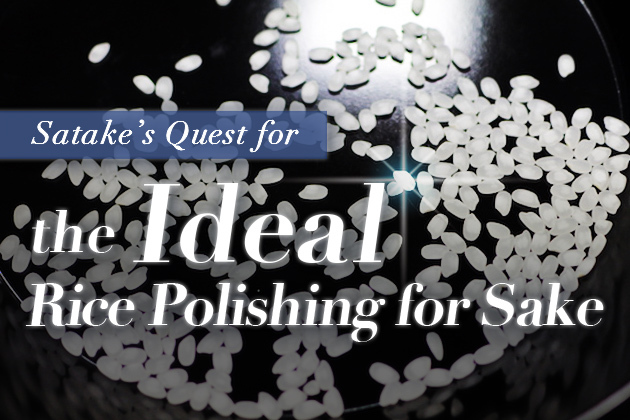
From Rice Milling to the Shinkansen: Inside Satake’s Quest for the Ideal Rice Polishing for Sake (2-1)
The very first step in making sake is seimai—the polishing (or milling) of rice before brewing. For most of sake’s history, this was extremely demanding work, carried out by hand over long hours. No matter how much effort brewers put into it, there was a limit to how far rice grains could be polished using human power alone.
That changed during the Meiji period (1868–1912) with the invention of the power-driven rice polishing machine. High polishing ratios—known in Japanese as a low seimai-buai (the percentage of the original grain remaining after milling), such as 60% or lower—became possible only because of this technology. In other words, without the development of mechanical rice polishing, the modern world of ginjo sake—premium sake made from highly polished rice—may never have existed.
The company that invented Japan’s first power-driven rice polishing machine and has continued refining the technology ever since is Satake Corporation, headquartered in Saijo, Higashi-Hiroshima, Hiroshima Prefecture. Since its founding, Satake has dedicated itself to the science and technology of rice polishing. In 2018, the company introduced a new machine that attracted attention within the sake industry: a groundbreaking design created to achieve its own Shingin seimai method, a proprietary polishing approach whose name suggests a “truer ginjo-style” finish.
We visited Satake’s headquarters in Saijo to explore the history and future of rice polishing: the invention that transformed sake brewing, what makes an ideal polish, and the story behind the development of Shingin seimai.
1896: A Company Born From a Single Machine
The power-driven rice polishing machine was invented in 1896, more than 120 years ago. From that single invention to today, the history of Satake is closely connected with the history of rice polishing itself.
Solving the Problem of a Brewing Town Without a River
Saijo, Hiroshima, where Satake is based, has long been one of Japan’s most famous sake-producing regions.
However, the town faced a unique challenge. Unlike other major brewing centers such as Nada and Fushimi, Saijo did not have large rivers suitable for powering water wheels. As a result, local breweries had to rely heavily on manual labor for rice polishing.
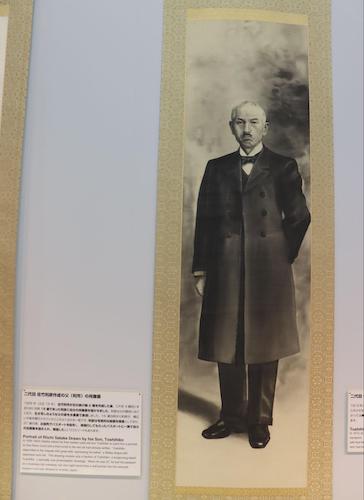
Two people set out to solve this problem: Wahei Kimura, head of the local brewery Kogarasuya Kimuraya (later Kamotsuru Sake Brewing), and Riichi Satake, an engineer known for his technical skills.
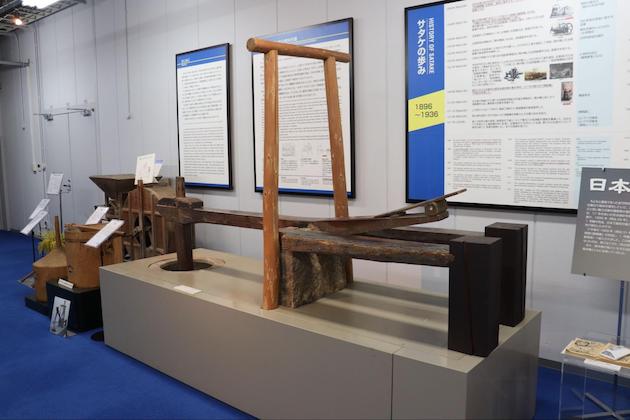
Satake had long wanted to reduce the burden of manual rice polishing on farmers. Kimura approached him with a request: could he develop a power-driven version of the karausu, the traditional foot-operated mortar used for polishing rice?
Their collaboration resulted in Japan’s first power-driven rice polishing machine, completed in 1896, marking the beginning of Satake’s history.
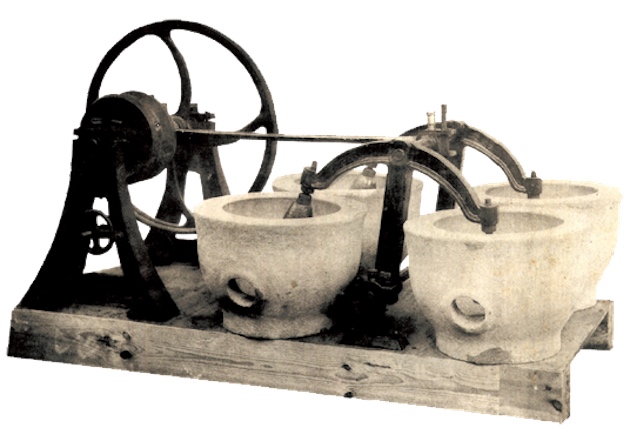
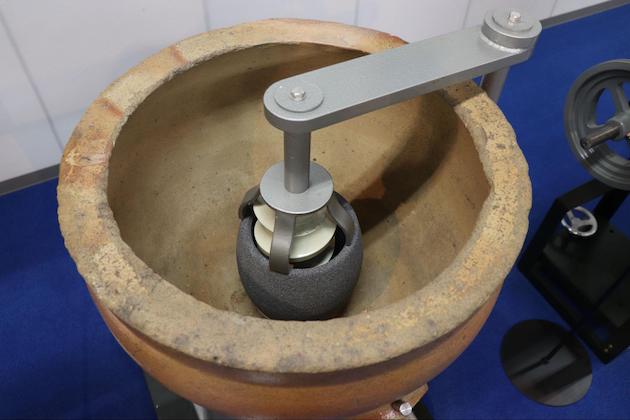
Satake continued improving the technology. In 1908, the company developed a vertical abrasive rice mill, a breakthrough that would fundamentally change sake brewing. For roughly the next century, the basic principles and structure of brewing-grade rice polishing machines remained largely unchanged. The impact of this invention was that significant.
Following Satake’s success, other rice-polishing machine manufacturers emerged, particularly around Hiroshima. Today, only two companies manufacture brewing-grade rice polishing machines in Japan: Satake and Shin-Nakano Industry in Okayama Prefecture. Chiyoda, which later exited the market, was also originally based in Hiroshima. A technology developed to solve one region’s problem went on to transform sake brewing across Japan.
From Sake Rice to Bullet Train Motors
What began as a rice polishing machine eventually expanded into a wide range of technologies. Today, Satake develops equipment not only for rice but also for wheat, corn, and other agricultural products beyond the world of sake.
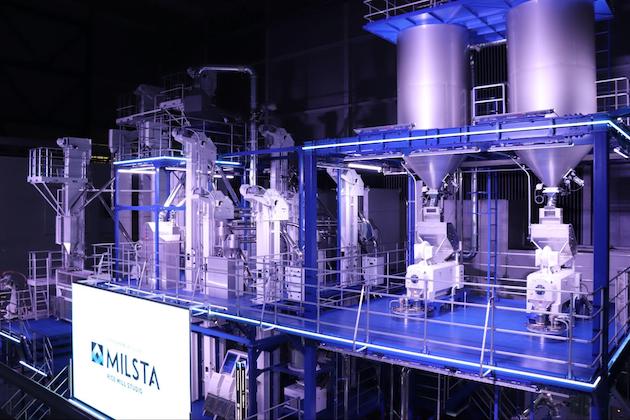
Some of this technology appears in unexpected places. Satake’s sorting and processing systems are used for grading coffee beans at Doutor Coffee, one of Japan’s well-known coffee chains.
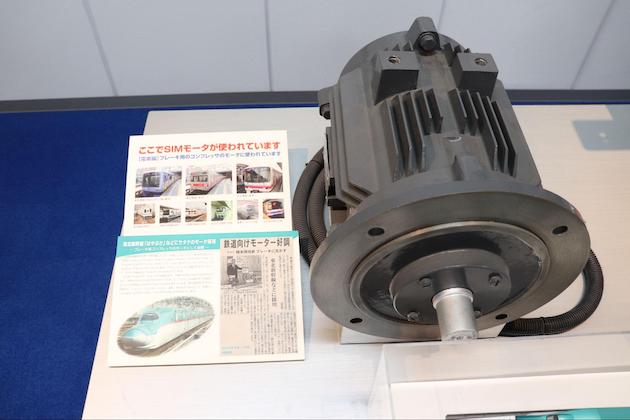
The company also applies its expertise in food processing to environmental and industrial machinery. Its technologies even contribute to Japan’s Shinkansen bullet trains, where Satake manufactures motors used in their systems.
Satake’s international expansion, which began in 1932, continues today. The company operates 17 locations across 13 countries and exports products to 150 countries worldwide. In some regions, a rice polishing machine is simply called “a Satake.” The name has become synonymous with the technology itself.
What Makes a “Good” Polish?
As a pioneer in rice polishing technology, Satake has spent more than a century pursuing the ideal polish.
So what does a company that has devoted its history to polishing actually consider a “good” polish?
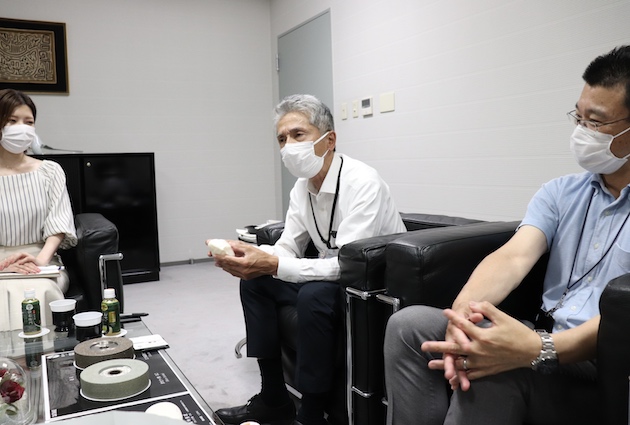
To explore this question, we spoke with three Satake representatives: Nao Ohashi from Public Relations, Nobuaki Niiyama, general manager for sake rice in the sales division, and Koji Kawakami, head of the Technology Innovation Research Laboratory.
Two Goals: Intact Grains and Uniform Size
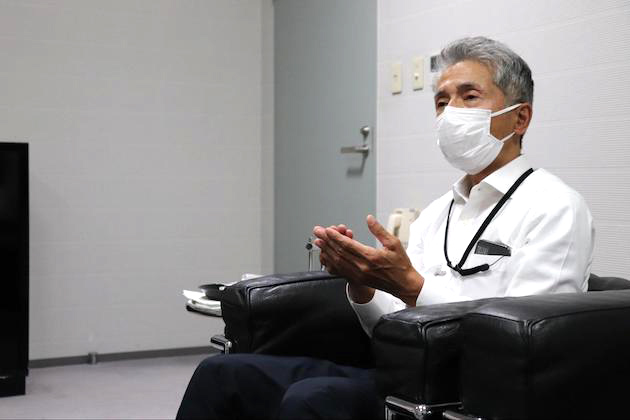
According to Niiyama, there are two essential goals when polishing rice for sake brewing.
The first is preventing grains from breaking. The second is achieving uniform grain size.
If a grain cracks during polishing, the outer layers that should have been removed may remain attached, potentially affecting the quality of the final sake. The higher the polishing target—as in ginjo production—the more fragile the rice becomes, making careful control increasingly important.
Uniform size is equally critical. When rice grains vary in size, they absorb water and dissolve at different speeds, making fermentation much harder to manage.
Understanding the Rice Before Polishing
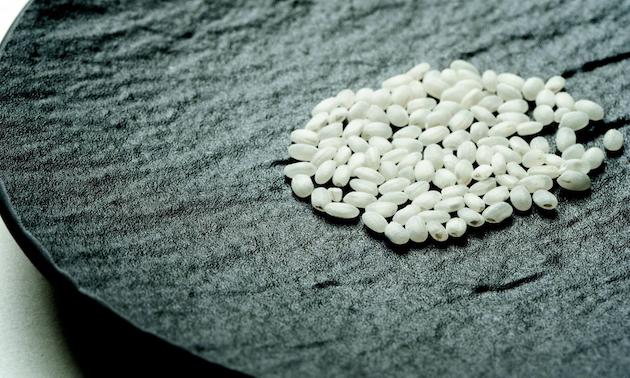
Maintaining intact, evenly sized grains may sound simple, but achieving it requires careful judgment. Niiyama explains that one of the most important factors is understanding the condition of each year’s rice.
“Rice is an agricultural product. Even rice grown in the same field changes from year to year in terms of size and moisture content. By carefully examining the condition of the rice and selecting the polishing method and ratio that match it, we believe brewers can more easily achieve the quality of sake they are aiming for.
On the brewing side, people often begin with a target—for example, ‘I want to make a junmai daiginjo polished to 35% using Yamada Nishiki, the most highly regarded sake rice variety.’
But the true goal is not simply reaching 35%. The goal is creating sake that has the character people expect from rice polished to 35%. Depending on the condition of the rice that year, it may be possible to polish to 35%. In another year, pushing that far may cause the grains to break, and stopping at 40% may actually produce a better result.
To create the sake you envision, understanding the quality of the unpolished rice before beginning the process is extremely important.”
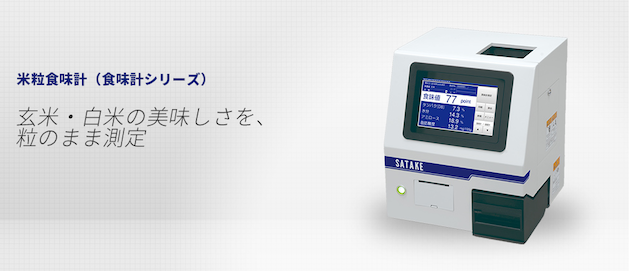
To better understand rice quality, Satake has also developed analytical equipment, explains Ohashi from Public Relations.
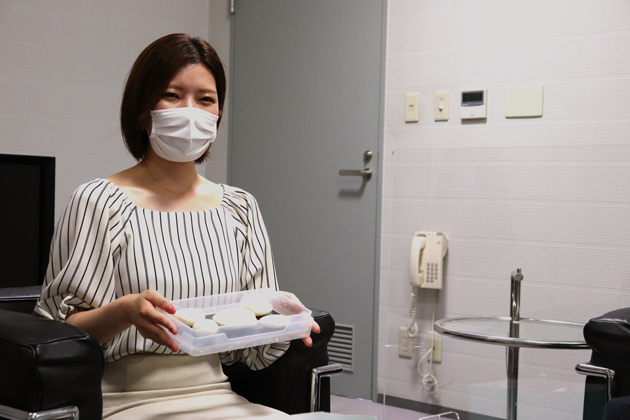
The company offers a rice-grain analyzer that measures internal characteristics such as moisture, protein, and amylose content.
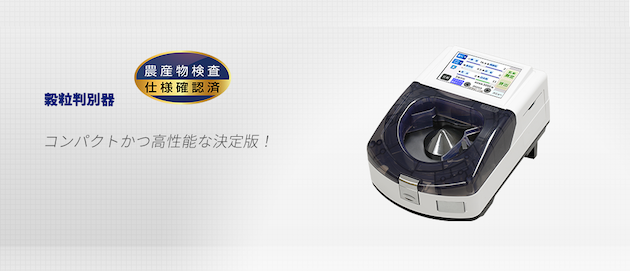
It also developed a grain inspection system that photographs rice from three directions—front, back, and side—to evaluate external characteristics such as grain size, shinpaku development (the opaque starchy core found in sake rice), and whether grains are cracked.
The goal is to transform the characteristics of rice into measurable data, creating an environment where brewers can pursue their ideal polishing process.
A Company That Learned to Look at the Grain
More than 120 years of focusing on one question—how to polish rice—has led Satake to a simple conclusion: Everything begins with understanding the grain. At a time when consumers increasingly value craftsmanship that respects raw materials, this philosophy may gradually influence sake brewing as well. The quiet contribution of Satake has been to build the technology behind the scenes—the machines that make modern sake possible.
In the second half of this story, we explore Satake’s 2018 innovation: the development of Shingin seimai, the technology behind it, and the research driving its future.
Pickup Articles


2019.01.18

2019.01.25
Trending Articles


Popular Articles
Recent Articles