
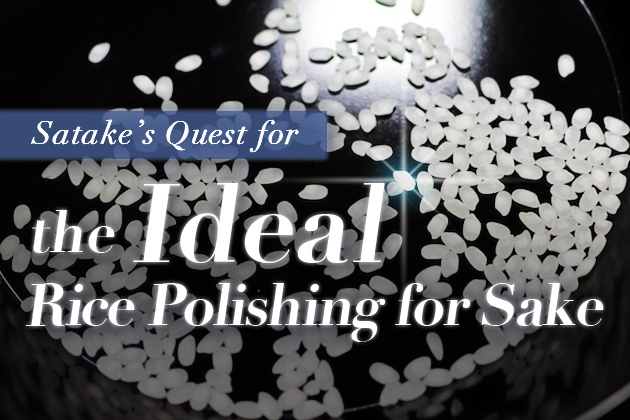
From Rice Milling to the Shinkansen: Inside Satake’s Quest for the Ideal Rice Polishing for Sake (2-1)
The very first step in making sake is seimai—the polishing (or milling) of rice before brewing. For most of sake’s history, this was extremely demanding work, carried out by hand over long hours. No matter how much effort brewers put into it, there was a limit to how far rice grains could be polished using human power alone. That changed during the Meiji period (1868–1912) with the invention of the power-driven rice polishing machine. High polishing ratios—known in Japanese as a low seimai-buai (the percentage of the original grain remaining after milling), such as 60% or lower—became possible only because of this technology. In other words, without the development of mechanical rice polishing, the modern world of ginjo sake—premium sake made from highly polished rice—may never have existed. The company that invented Japan’s first power-driven rice polishing machine and has continued refining the technology ever since is Satake Corporation, headquartered in Saijo, Higashi-Hiroshima, Hiroshima Prefecture. Since its founding, Satake has dedicated itself to the science and technology of rice polishing. In 2018, the company introduced a new machine that attracted attention within the sake industry: a groundbreaking design created to achieve its own Shingin seimai method, a proprietary polishing approach whose name suggests a “truer ginjo-style” finish. We visited Satake’s headquarters in Saijo to explore the history and future of rice polishing: the invention that transformed sake brewing, what makes an ideal polish, and the story behind the development of Shingin seimai.
Pickup Articles


Popular Articles


Learn Sake



Latest articles
Trending Articles

Sakagura
Nothing Wasted: MYVY, the Remarkable Second Life of Sake Lees — Mikawa Shuzojo, Fukui (Maibijin)



- Follow Us!


