2026.01
14
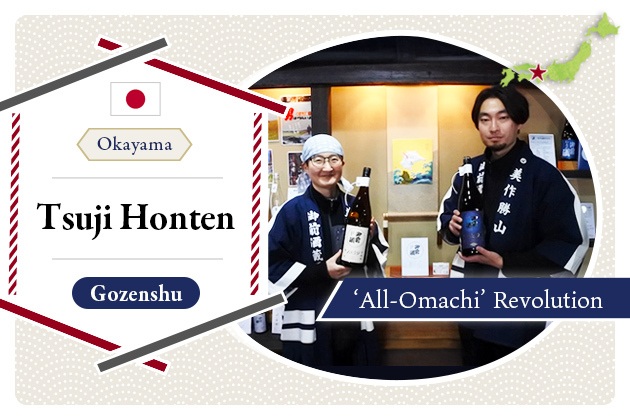
‘All-Omachi’ Revolution: How Gozenshu’s Brother-and-Sister Team Is Transforming the Brewery
Tsuji Honten, a sake brewery based in Maniwa City, Okayama Prefecture, has made a decisive shift beginning with the 2022 brewing year (BY): all sake produced at the brewery is now made exclusively with Omachi rice.
Omachi, one of Japan’s most highly regarded sake rice varieties, is grown predominantly in Okayama, and many breweries in the prefecture have long relied on it. However, Tsuji Honten is the first brewery to commit to using Omachi alone across its entire lineup—from daiginjo to futsushu.
Leading this bold move to become an “all-Omachi brewery” are siblings Soichiro Tsuji, president of Tsuji Honten, and Maiko Tsuji, the brewery’s toji. Both returned to the family brewery roughly twenty years ago, and this decision represents the culmination of the reforms they have steadily pursued together. This article traces the process that led to this defining moment.
A Brother-and-Sister Team Leading Change at the Brewery
Running from Himeji City in Hyogo Prefecture across the heart of Okayama and on to Matsue in Shimane, the Izumo Kaido once served as a vital inland route. Located almost exactly midway along this road, Katsuyama flourished as both a post town and a castle town. Even today, its historic townscape—marked by earthen storehouses, white plaster walls, and latticed windows—remains well preserved. In 1985, it became one of the first areas in Okayama Prefecture to be designated a Preservation District for Groups of Historic Buildings. Among the many handsome structures that draw visitors to Katsuyama, one building stands out for its imposing presence: the brewery of Tsuji Honten.
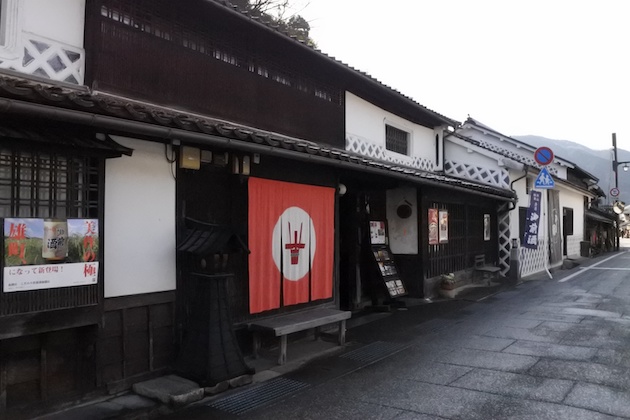
Because the brewery was known to everyone in town, Maiko Tsuji, born in 1977, and her younger brother Soichiro, born two years later, grew up labeled as “the children of that sake brewery.” It was a label they found stifling and deeply frustrating. As a result, Maiko left Katsuyama after junior high school to attend high school in Okayama City. She later went on to university in Tokyo, imagining a future in international work. Soichiro, a passionate music lover, moved to Tokyo immediately after graduating from high school to pursue a career as a professional musician. Despite being the eldest son, he recalls firmly deciding at the time that he would “never take over the sake brewery.”
For Maiko, however, a turning point came first. Whenever her university friends learned that she was the daughter of a sake brewer, they would invariably ask, “So how is sake actually made?” Time and again, she found herself unable to answer. “Not knowing how sake is made felt embarrassing for someone born into a brewery,” she recalls. “And if I were to work internationally one day, not being able to explain Japan’s national drink would be unacceptable.” With these thoughts weighing on her, she asked her father, Kinichiro Tsuji, and the brewery’s then toji, Takumi Harada, to allow her to join the brewing process for one week during the winter, shortly before graduating from university.
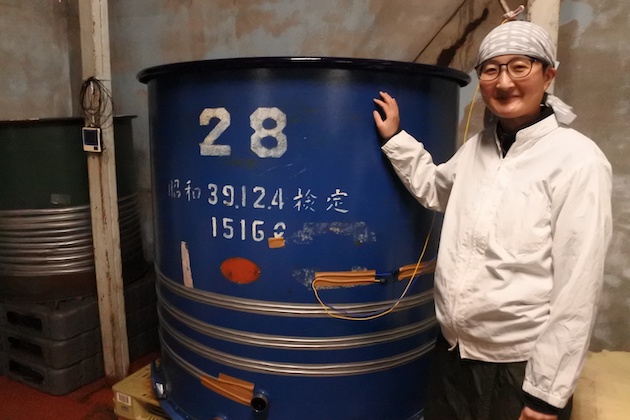
Despite having grown up at the brewery, Maiko had never once stepped into the brewing floor. That single week of hands-on brewing experience, however, completely transformed her outlook. “I had no idea sake brewing could be this fascinating,” she recalls. Deeply moved, she began to wonder whether this might be her true calling. Although she joined the company where she had received a job offer the following April, she resigned after just six months and returned to the brewery to apprentice under the toji.
Some of the brewers reportedly viewed her with skepticism, assuming that “the brewery owner’s daughter would give up once things got tough.” Determined to prove otherwise, Maiko committed herself fully to learning the craft, working closely alongside the toji and steadily mastering the fundamentals of sake brewing—driven by a quiet resolve to one day earn their respect.
Meanwhile, Soichiro continued to struggle in Tokyo, chasing a major-label debut as a musician. As time passed without a breakthrough, his efforts began to feel increasingly stalled. It was during this period that he received a letter from Maiko, who had already returned to the brewery.
“Punk rock is about breaking with convention and creating something new,” she wrote. “That same spirit is essential to transforming a sake brewery. I want you to bring that mindset to sake brewing and help reform the brewery.”
Around the same time, their father told him, “Give it one more year. If you still haven’t debuted by then, come back to the brewery.” Determined to succeed on his own terms, Soichiro accepted the condition, vowing, “I’ll make my debut no matter what.”
In the end, however, that debut never came. In 2002, at the age of 23, Soichiro returned home to the brewery. Yet he was keenly aware that he lacked experience in sake production itself. If there was a way he could contribute, he felt, it lay in overseas markets—an area the brewery had yet to seriously explore. Before returning to Katsuyama, he therefore spent a month traveling through the United Kingdom and the United States.
“That experience changed everything for me,” Soichiro recalls. “In Japan, I had felt that the situations in which sake was consumed rarely looked cool. Overseas, though, I saw young people drinking sake in stylish restaurants, served in beautiful glassware. I realized that if we could expand these kinds of settings and ways of drinking sake in Japan as well, the future of the brewery might open up. That made me think I might actually be able to contribute—and with that conviction, I came back.”
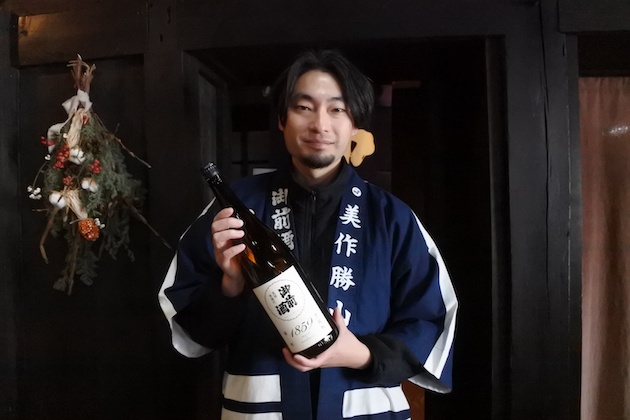
After returning to the brewery, Soichiro began working in the kitchen of the brewery’s directly operated restaurant while developing new promotional initiatives for sake. From his fourth year onward, he also became involved in brewing itself. As he gained a comprehensive understanding of the brewery’s operations, he and Maiko began to have in-depth discussions about the challenges that needed to be addressed in order to transform the brewery.
What troubled them most was the rigid separation between the departments responsible for brewing, bottling and shipping, and sales. Communication between these divisions was minimal. “If brewers have no interest in how their sake is sold, and those on the sales side know nothing about the effort and ingenuity that go into making it, then the brewery’s intentions will never reach the drinker,” they came to realize.
Around this time, the brewery’s toji fell ill, and during the 2006BY, Maiko assumed the role of acting toji. From the following year, she officially took on the position of kuramoto-toji, adual role in which the brewery owner also serves as head brewer. Viewing this as an opportunity to enact meaningful change, the siblings decided to overhaul the brewery’s structure. They abolished the long-standing system of hiring seasonal workers only during the winter brewing season and instead employed all brewers as full-time staff. From that point on, the entire company committed itself collectively to every stage of the process—from sake production through bottling and shipping to final sales—marking a fundamental shift in how the brewery operated.
Launching a Flagship Brand Made Exclusively with Omachi
Seizing this moment of change, the siblings decided to debut a new brand that would serve as the brewery’s flagship. Their goal was clear: to make sake something young people could enjoy in a stylish way.
“Even a 720 mL bottle feels too large for an individual purchase these days, let alone a 1.8-liter bottle. And labels covered in brush-style kanji characters don’t necessarily feel modern,” they felt. The result was GOZENSHU 9, a slim, vertically oriented 500 mL bottle designed with contemporary lifestyles in mind.
“The name reflects two things,” explains Soichiro. “At the time, there were nine of us working at the brewery—including ourselves—and it also represents our determination to aim for a perfect score of ten.” Beyond its appearance, equal attention was paid to what was inside the bottle. The sake is brewed exclusively with Omachi rice, and for the yeast starter, the team chose Bodaimoto, a method dating back to the Muromachi period. The result was a modern flavor profile that emphasizes both sweetness and acidity.
Omachi rice itself is said to have originated in 1859, when Jinzo Kishimoto, a devoted farmer from Omachi in Takashima Village, Bizen Province, discovered two unusually tall rice plants while returning from a pilgrimage to Mount Daisen in present-day Tottori Prefecture. He brought the plants home and began cultivating them. Initially known as nihonso (“two-stalk rice”), the variety later took the name Omachi, after the area where it was further developed.
As the oldest extant native sake rice variety in Japan, Omachi earned a formidable reputation for its brewing qualities. From the 1910s through the 1930s, it was widely said that achieving top honors at national sake competitions was nearly impossible without using Omachi. For this reason, it became a crucial parent strain in sake rice breeding, giving rise to varieties such as Yamadanishiki, Gohyakumangoku, and Aiyama, all of which carry Omachi’s genetic lineage.
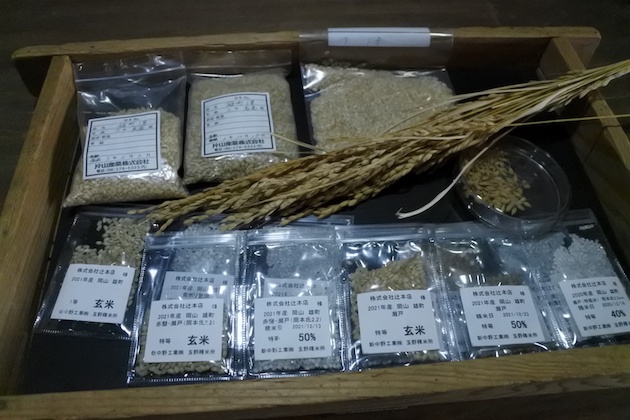
In recent years, annual Omachi production has hovered at around 1,600 metric tons, with more than 90 percent cultivated in Okayama Prefecture. For the siblings, this made the decision feel self-evident. “If we were to launch a new brand as an Okayama brewery, using Omachi alone was only natural,” they reasoned. “By working with Omachi—a rice capable of producing deep, expressive umami—we could present a new style of sake with a distinct identity.”
When GOZENSHU 9 was released in 2009, the initial response was cautious. Many retailers were skeptical, suggesting that “a bottle this unconventional would be difficult to sell,” and early sales were modest. However, in the wake of the Great East Japan Earthquake in March 2011, the nationwide movement to “support Japan by drinking sake” gave the brand unexpected momentum. The innovative bottle design gradually won acceptance, and the product went on to grow steadily. Today, GOZENSHU 9 has become a flagship item, accounting for roughly 30 percent of the brewery’s total sales.
At the same time, however, competition within the regional sake market was intensifying. Brewers and toji of the same generation as the Tsuji siblings were launching new styles of sake one after another, driven by increasingly free and experimental approaches.
“As sales of futsushu declined year by year, we had to offset that by expanding sales of tokutei meisho-shu such as junmai,” Soichiro explains. “We broadened our distribution beyond specialty retailers, selling through wholesalers to supermarkets and convenience stores as well. If a trading partner approached us, we tended to say yes to everything, which led to a growing number of private-label products. Before we knew it, the number of items we were handling—including limited releases—had ballooned, and retailers started telling us, ‘We don’t really understand what Gozenshu is trying to be.’”
Recognizing the need for a clearer and more compelling message as a brewery, the siblings decided to undertake a comprehensive rebranding of Tsuji Honten. It was around 2017 when they made that decision.
Becoming Japan’s First All-Omachi Brewery
Sake made with Omachi is known for its distinctive character and has long enjoyed a devoted following. Some particularly enthusiastic fans even refer to themselves as “Omacists.” In an effort to encourage more breweries to work with Omachi, the Omachi Summit has been held annually since 2008 under the auspices of JA Zen-Noh Okayama. At this event, breweries from across Japan gather to present and evaluate their Omachi-based sakes, drawing large crowds of Omachi enthusiasts.
Despite this level of recognition—so much so that Omachi is virtually the only sake rice celebrated through a standalone national event—no brewery had gone so far as to switch entirely to Omachi. Even at Tsuji Honten, Omachi accounted for roughly 70 percent of rice usage at the time, with the remainder made up of Yamadanishiki and locally grown table rice.
The primary reason was cost. A single bale (60 kilograms of brown rice) of first-grade Omachi typically sells for around ¥25,000, roughly on par with Yamadanishiki (as of 2023). Compared with average table rice, however, it trades at a premium of around ¥10,000 per bale. “It was simply not a rice you could use for locally consumed futsushu or affordable junmai,” Maiko explains. “We never imagined brewing everything with Omachi.” Her words underscore the economic difficulty of such a decision.
“Many drinkers associate great Omachi sake with breweries outside Okayama,” Soichiro says. “To overturn that perception and firmly establish the idea that ‘Omachi equals Okayama sake,’ there was no option but to go all in on Omachi.” With that resolve, he began searching for a viable path forward.
What caught his attention was a category of rice arriving from contract farmers: non-graded rice.
In Japan, rice is graded from Special Grade down through First, Second, and Third Grade. Rice that fails to meet these standards is classified as non-graded (to-gai). Such rice may show uneven grain size, a higher proportion of immature green kernels, or visible cracking—characteristics that historically led most toji to dismiss it outright, believing that “good sake cannot be made from non-graded rice.” When rice is purchased through JA, grades can be specified in advance. Under contract cultivation, however, breweries are generally required to accept the entire harvest, including non-graded rice.
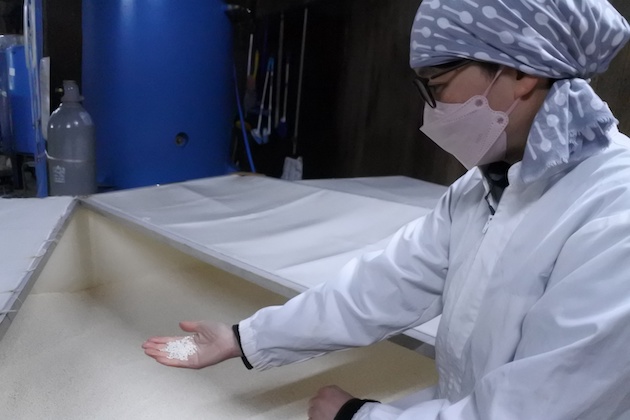
For this reason, Tsuji Honten had traditionally diverted non-graded rice to other uses—such as producing amazake or making koji for seasonings used in the brewery’s restaurant. However, developments elsewhere in the industry also proved encouraging. Notably, Dassai in Yamaguchi Prefecture demonstrated that excellent sake could be made by aggressively polishing non-graded rice. Seeing this, Soichiro found renewed motivation to pursue the idea himself.
To make the concept viable, the brewery undertook two experiments during the 2019BY. The first involved producing a junmai daiginjo–class sake using non-graded rice. As part of a planned seasonal Omachi trilogy intended to highlight the brewery’s commitment to the variety, one of the three was brewed using non-graded Omachi polished down to 50 percent. The result was a sake whose quality stood shoulder to shoulder with the other two releases.
The second experiment focused on a locally distributed tokubetsu junmai traditionally brewed with table rice polished to 60 percent. This was reworked using non-graded Omachi polished to 70 percent. Reflecting on the outcome, Maiko explains, “Even though it was non-graded rice, Omachi’s fundamental characteristics were unchanged. The mold penetration during koji making was excellent. Compared to table rice, it was far easier to work with, and the finished sake was clearly superior.”
Until then, the brewery’s futsushu had been brewed using even less expensive processed rice polished to 70 percent. This experiment confirmed that using non-graded Omachi at 70 percent polishing resulted in noticeably higher quality. Crucially, it also showed that switching local junmai and futsushu to Omachi would not increase costs, despite the improvement in quality.
Securing sufficient quantities of rice remained a concern, but the local JA cooperative assured the brewery that supply would not be an issue. Surprisingly, the final hurdle in committing to an all-Omachi approach came from Maiko herself.
“As a brewer, you want to leave room to experiment,” she says. “If you commit to using only Omachi, it becomes harder to create a wide range of flavor profiles. So I resisted at first—but in the end, I gave in,” she adds with a laugh.
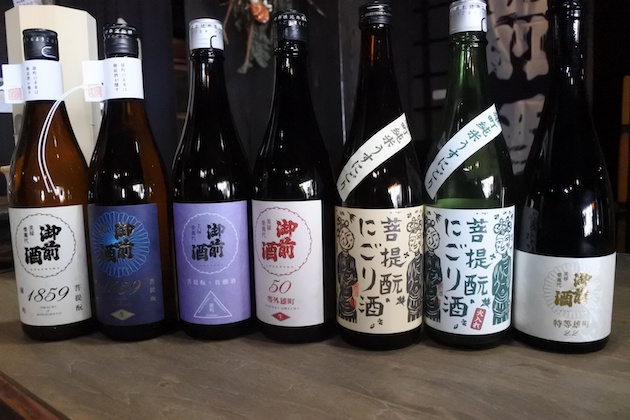
After two years of preparation and growing accustomed to working with non-graded rice, the brewery made the full transition to Omachi beginning with the 2022 brewing year. Following their 2020 declaration to become an “all-Omachi brewery,” they also launched a new brand, Gozenshu 1859, named after the year in which Omachi rice was first discovered.
Toward Making “Omachi = Okayama Sake”
During my visit for this interview, freshly steamed Omachi rice was being carried into the koji room—a scene that underscored just how central Omachi has become to daily operations at the brewery.
“By focusing exclusively on Omachi, our level of familiarity has increased, and the overall quality of the sake has become more consistent,” Maiko explains. “At the same time, using a single rice variety makes it more challenging to create clear differences in flavor across different product specifications. We are also keenly aware of the risks posed by poor harvests or flooding due to extreme weather, which could jeopardize our ability to secure sufficient quantities of Omachi. To mitigate that risk, we are making a conscious effort to diversify the regions within Okayama where our contracted farmers grow the rice.”
While the all-Omachi approach offers a strong point of differentiation, it also brings complications. “Because we are using non-graded rice, some of our sake can no longer be labeled as junmai,” Soichiro notes. “There are drinkers who place greater importance on whether a sake carries the junmai designation than on the type of rice used. For those who have long enjoyed our local junmai sake, we know we will need to continue explaining our approach carefully and patiently.”
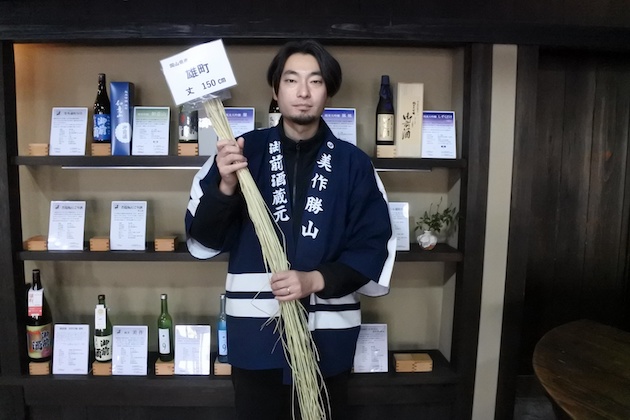
To further underscore their position as the only brewery in Japan committed to using Omachi exclusively, the siblings are working closely with local farmers on what they call the “Tokujo Omachi Project.”
Rice grading is determined based on two criteria: the seiryu-ritsu (the percentage of well-formed grains) and the higairyū-ritsu (the percentage of damaged grains, including dead kernels, discolored grains, foreign grains, and other impurities). First-grade rice must meet a standard of at least 70 percent well-formed grains and no more than 15 percent damaged grains. Exceptional lots of brown rice may be classified even higher, as Special Grade (80 percent or more well-formed grains and 10 percent or less damaged grains) or Tokujo (90 percent or more well-formed grains and 5 percent or less damaged grains).
In practice, however, such top-tier classifications have historically applied almost exclusively to Yamadanishiki. For many years, Omachi had no record of achieving Tokujo status. That changed with the 2018 harvest, when Omachi was graded as Tokujo for the first time.
“There was a great deal of excitement among farmers in Okayama,” Soichiro recalls. “But unfortunately, that rice was purchased by a brewery outside the prefecture. We were left with a deep sense of frustration—why couldn’t a brewery in Omachi’s home region use it?”
Rather than waiting passively for another exceptional harvest to appear, the siblings decided to take matters into their own hands. Beginning in 2019, they launched a concerted effort with like-minded farmers to deliberately cultivate Omachi capable of achieving Tokujo status.
“So far, we have managed to reach Special Grade, but Tokujo remains elusive,” Soichiro says. “Still, we are determined to achieve it. When we do, we intend to make that rice the foundation of a flagship sake that truly represents Tsuji Honten as an all-Omachi brewery.”
With that determination, the siblings continue to push forward. If their efforts bear fruit, they may well inspire more breweries in Okayama to take the bold step of committing fully to Omachi—further reinforcing the idea that Omachi is, above all, the rice of Okayama sake.
Brewery Information
Tsuji Honten
Address: 116 Katsuyama, Maniwa City, Okayama Prefecture, Japan
Tel: +81-867-44-3155
Founded: 1804
President: Soichiro Tsuji
Head Brewer: Maiko Tsuji
Website: https://www.gozenshu.co.jp/
Pickup Articles


2019.01.18

2019.01.25
Trending Articles


Popular Articles
Recent Articles