2026.03
11
Brewing Sake, Building Communities: Ine to Agave’s Vision for the Future of Rural Japan
There is a brewery called Ine to Agave, a name that immediately raises questions. Ine refers to the rice plant that produces the grain used to make sake, while agave is a plant native to Mexico and the raw material for distilled spirits such as tequila. Why would a single brewery bring together two ingredients from such different cultural and geographical traditions? The answer can be found in Oga City, Akita Prefecture, in northern Japan.
Founded in 2021, Ine to Agave produces a new category of alcohol known as “Craft Sake” (see note), made using traditional sake-brewing techniques. True to its name, the brewery creates beverages that combine rice with a wide range of ingredients—including agave syrup—while also taking an active role in revitalizing the local community of Oga through its brewing activities.
In this article, SAKE Street explores the projects Ine to Agave has undertaken over the past three years, examining them through the dual lenses of brewing and community development (written in November 2024). Despite being only three years old, the brewery has launched a remarkably diverse range of initiatives. What philosophy lies at the core of Ine to Agave’s approach?
Note: Craft Sake — A new genre of alcoholic beverages based on sake-brewing methods, in which additional ingredients are added during the fermentation process. Under Japan’s Liquor Tax Act, these products are classified not as nihonshu (sake), but as “other brewed alcoholic beverages.”
The Road to Founding the Brewery
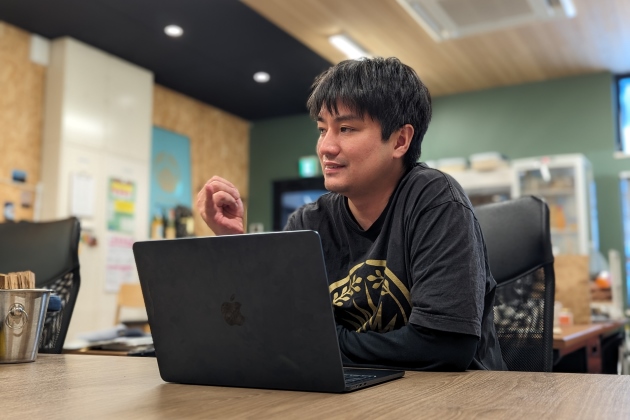
The founder of Ine to Agave, Shuhei Okazumi, was born in Kitakyushu City, Fukuoka Prefecture—some 1,500 kilometers away from Oga City, Akita Prefecture. A pivotal turning point in his life came when he began working at a sake brewery in Akita City known for producing the highly acclaimed brand Aramasa.
While studying in the Faculty of Business Administration at Kobe University, Okazumi found himself uncertain about his future. Around that time, he encountered Aramasa sake at an Akita-themed izakaya in Kobe called Bodega. Captivated by the flavor, he remarked that he wanted to work at that brewery. The proprietress shared his comment on social media, where it happened to catch the attention of Yusuke Sato, the head of the brewery. As a result, Okazumi was hired as a part-time worker in 2014.
At the brewery, Okazumi trained under Hiromu Koseki, who was serving as toji (master brewer) at the time. Although Okazumi had originally aspired to become an entrepreneur, his experiences there gradually led him to envision founding a brewery that could serve as a breakthrough for the sake industry as a whole.
In 2018, Okazumi left the brewery and began training in Ogata Village, also in Akita Prefecture, under Norio Ishiyama, a rice farmer practicing natural cultivation without fertilizers or pesticides. Using rice grown under the guidance of a pioneer in natural farming—who was among the first in Japan to receive organic JAS certification—Okazumi released his first product under the Ine to Agave name in February 2020: “Ine to Agave prototype 01.”
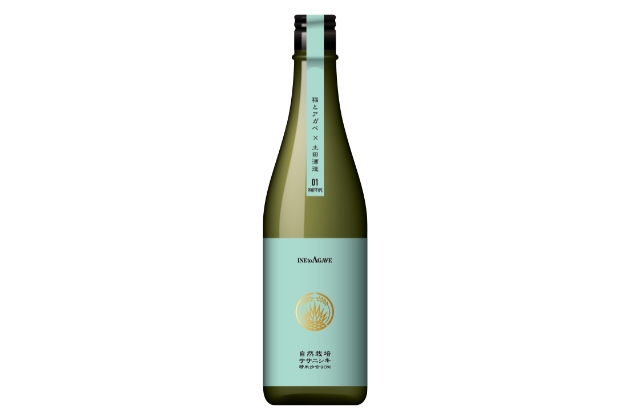
This sake was made possible through a connection formed earlier: Okazumi had once taught koji-making to Genki Hoshino, the head brewer of Tsuchida Sake Brewery, when Hoshino was training at Aramasa. Building on that relationship, the sake was produced through contract brewing at Tsuchida Shuzo. The brewing approach was deliberately ambitious, combining a low polishing rate of 90%, a yeast-free kimoto starter, and low-temperature fermentation. The prototype series was released a total of four times, up until just before the opening of the Ine to Agave brewery.
In March 2020, Okazumi was appointed the first head brewer of Konohanano Brewery in Kuramae, Tokyo. Following his arrival, the brewery became a training ground for young brewers who aspired to one day establish their own breweries.
While brewing doburoku and other styles of sake in Tokyo, Okazumi steadily prepared to establish his own brewery in Akita Prefecture. In May 2021, he secured more than 200 million yen in financing from the Japan Finance Corporation and Akita Bank. That November, Ine to Agave officially opened on the former site of JR Oga Station in Oga City. Soon after, the brewery released its flagship Craft Sake, Ine to Agave, made with agave syrup as a secondary ingredient.
Revitalizing Oga Through the Renovation of Shuttered Properties
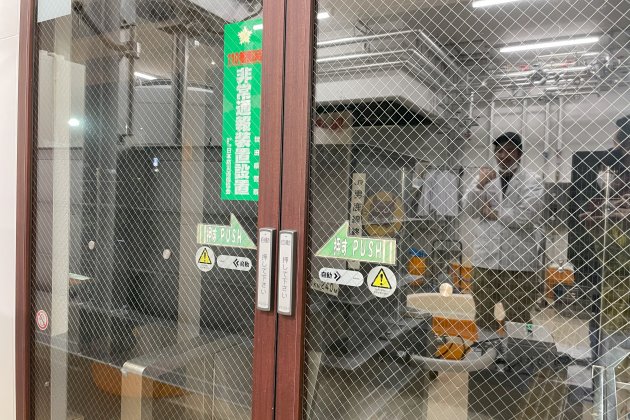
Guided by Okazumi’s desire to “give back to Akita Prefecture, which supported me during my years at Aramasa,” Ine to Agave has committed itself not only to brewing, but also to community revitalization in Oga City, where depopulation has become a pressing issue. By renovating vacant properties and reopening shuttered storefronts one by one, the brewery aims to create new employment opportunities and bring fresh energy back into the town.
The brewery itself occupies the former JR Oga Station building. With renovations kept deliberately minimal, elements such as the platform and the automatic doors of the old station office have been preserved, allowing local memories of the space to live on. An on-site restaurant operates as a café during the day, while in the evening it hosts pairing dinners prepared by young chefs.
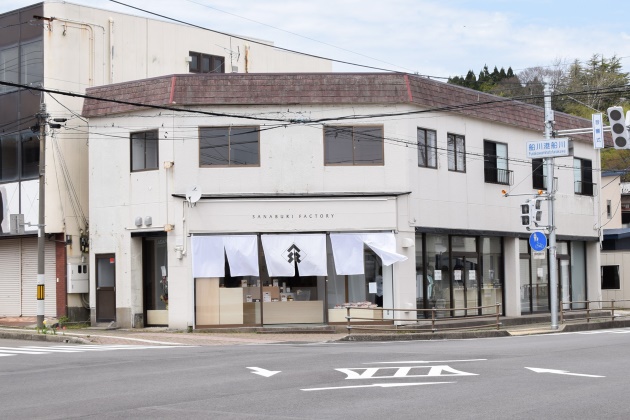
Okazumi believes that “if there are at least three places you want to visit in a town, people will be motivated to travel there.” In 2023, Ine to Agave opened SANABURI FACTORY, a processing facility located just a two-minute walk from the brewery. In addition to producing original goods, the space also functions as a select shop, carrying items curated from standout producers across Japan. Later that summer, the team opened a ramen restaurant called Ogaya, located directly across from the brewery.
As the number of visitors to Oga gradually increased, it became clear that there were virtually no accommodation options in the area surrounding the brewery. In response, Ine to Agave launched a hospitality business of its own. In June 2024, reservations opened for Hirune, a private rental house and guesthouse created by renovating former company housing owned by Tohoku Electric Power. At the same time, construction is underway on Hotel Kaze-Machi-Minato, a larger-scale project scheduled to open in 2025, featuring 14 guest rooms, a Chinese restaurant, and a sauna.
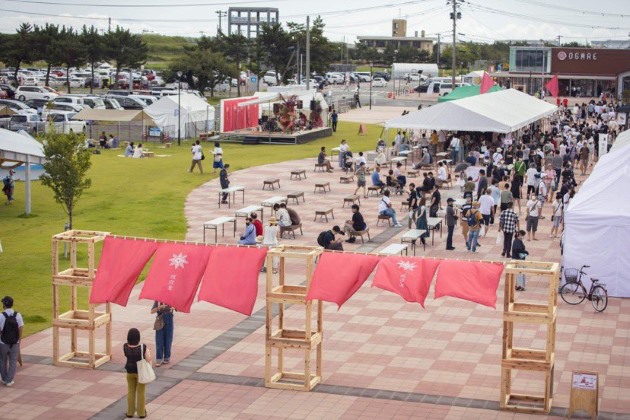
To raise awareness of Oga as it undergoes this transformation, the team has also focused on attracting visitors through events. Shojoen, a gathering of Craft Sake breweries, was held in the summer of 2024 alongside a traditional Bon dance festival long practiced in Oga. Other initiatives include OGA Onsen Jack, a music event staged by taking over an entire hot spring inn, and the Second International Seaweed Summit, which brought together specialists in slow food. Through this diverse range of events, Ine to Agave has been actively promoting the name of Oga both within Japan and internationally.
Sake and Craft Sake
The emergence of Craft Sake as a new category is closely tied to Japan’s legal framework, which effectively prevents the issuance of new licenses to produce nihonshu (Japanese sake).
Under Japanese law, only companies that obtained a sake-brewing license before the postwar introduction of supply–demand adjustment requirements are permitted to produce sake domestically. As a result, anyone who wishes to brew sake at their own facility today has only two realistic options: acquiring an existing brewery through M&A, or producing sake exclusively for export markets.
While this system was originally designed to protect existing breweries, it has also created a structural challenge. Even highly skilled and passionate brewers often find it impossible to envision a career path that includes owning their own brewery.
Craft Sake addresses this constraint by deliberately stepping outside the strict legal definition of sake production under the Liquor Tax Act. By producing beverages that do not fully conform to the regulations governing sake, Craft Sake is classified instead as “other brewed alcoholic beverages,” making new entry into the alcohol industry legally possible.
Breweries such as Ine to Agave were born as a challenge to the current structure of the sake industry. However, they are not positioned in opposition to it. Okazumi himself has stated that Craft Sake has the potential to bring new consumers into the broader sake market, and the brewery is actively developing businesses that can benefit traditional sake producers as well.
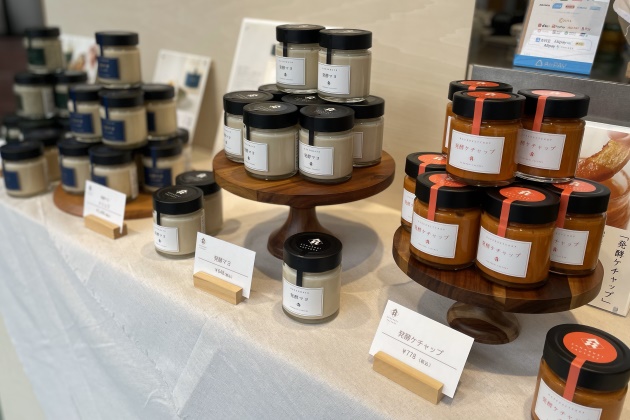
One such initiative focuses on the utilization of sake lees (sake kasu). For many small and mid-sized regional breweries, disposing of sake lees generated during production is a persistent problem. Through SANABURI FACTORY, Ine to Agave produces and sells a mayonnaise-style condiment made from sake lees. At present, the product uses only sake lees generated in-house, but the company is considering purchasing surplus lees from other breweries in the future.
Efforts to expand the use of sake lees are steadily progressing. In July 2024, Ine to Agave collaborated with GOOD NEWS Inc., a company engaged in product development related to regional revitalization, to launch a lemon cake made with sake lees called Sanae-kyo Lemon. In addition, an affiliated company, Sanaburi Distillery Inc., constructed a distillery in the winter of 2024, where spirits are produced using kasu-tori shochu—a traditional distilled liquor made from sake lees—as a base.
Expanding Regional Impact Through Collaboration
In just three years, Ine to Agave has brought an unusually wide range of projects to life. Its ideas and execution have drawn attention well beyond the boundaries of Craft Sake or even the alcohol industry, leading to collaborations with companies interested in exploring new approaches to regional revitalization.
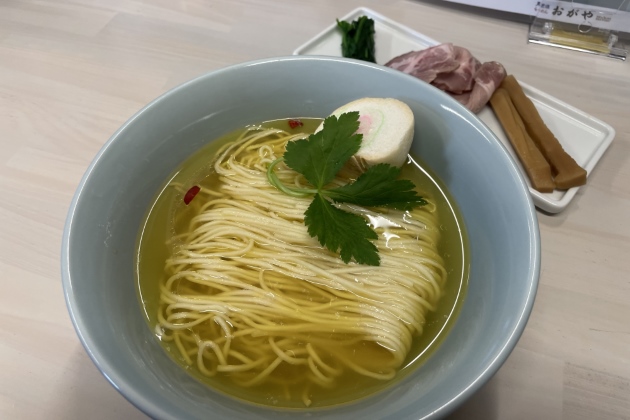
One example is Ogaya, a ramen restaurant that has attracted long lines since opening in August 2023. The project was made possible through the cooperation of Chikara no Moto Holdings, the company behind the nationally renowned ramen chain Ippudo, which originated in Fukuoka. Under the company’s supervision, Ogaya serves ramen made with local ingredients such as shottsuru (a traditional fish sauce from Oga) and Akita’s famed Hinai chicken.
Ine to Agave has also partnered with Mitsubishi Estate, joining its Megurume-ku Project, an initiative launched to rethink placemaking beyond regional boundaries through agriculture and food. Building on this relationship, Ine to Agave has co-hosted the “Our Placemaking Summit – BEYOND LOCAL” since 2023, together with Mitsubishi Estate and Mitsubishi Jisho Design. The summit provides a platform for practitioners from across Japan to share their respective approaches to community development.
The goal of this collaborative effort—bringing together Mitsubishi Estate and other major partners—is to position Oga as a “sacred ground for placemaking.” While the project clearly benefits Ine to Agave and the city of Oga, it is also expected to serve as a valuable arena for young employees at partner companies, offering them opportunities to take on ambitious challenges and play active roles in large-scale projects.
“In Oga’s community development initiatives, young professionals can take the lead and challenge themselves with substantial, high-impact work,” Okazumi explains. “Since the project began, I’ve even heard that some people have joined partner companies because they were inspired by Oga’s initiatives.”
More recently, Ine to Agave was selected for NTT’s regional revitalization smart city initiative, the Sustainable Smart City Partner Program (SSPP). Through this program, Shunsuke Ishikawa, CEO of the cultural design firm KESIKI, is providing comprehensive support for Oga’s placemaking efforts. In addition, a new project with Japan Post Group has been confirmed and is scheduled to begin in 2025.
Ine to Agave’s Brewing Philosophy
Using Low Polished, Naturally Grown Rice for All of Its Sake
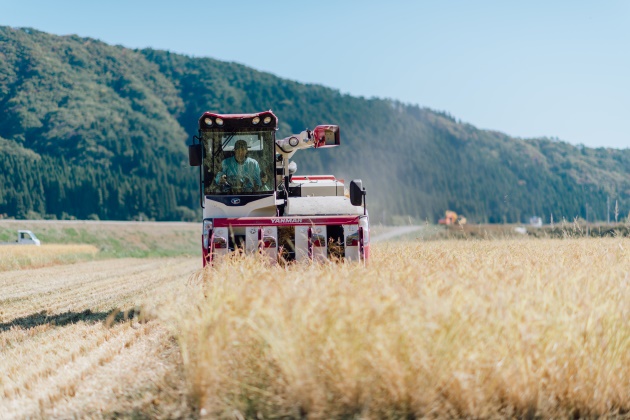
Okazumi believes that naturally grown rice is particularly well suited to sake brewing. Compared with conventionally cultivated rice, naturally grown rice tends to contain lower levels of protein, which helps reduce grain breakage and the development of off-flavors. Based on this belief, Ine to Agave has used almost exclusively naturally grown rice since its founding—specifically, rice polished to just 90%, the same level used for table rice.
“Any form of craftsmanship needs constraints,” Okazumi explains. “At Ine to Agave, our constraint is not polishing the rice. This idea is strongly influenced by a phrase my mentor Koseki often used during my time at Aramasa: ‘Don’t become a slave to choices.’
When there are endless options, things may appear free, but production can easily become standardized—everyone ends up choosing the same yeast and the same techniques. By imposing the constraint of not polishing the rice, we’re forced to ask, ‘How can we make delicious sake within these limits?’ That pushes us beyond textbook methods and encourages innovation. Those innovations become techniques unique to our brewery, ultimately leading to truly one-of-a-kind sake.”
One technique born from this approach is washing the rice with warm water. Because unpolished rice contains more surface oils, sake may taste excellent immediately after pressing but lose balance after bottling. To address this issue, Ine to Agave washes the rice using water heated to around 50°C, which helps remove excess oils. This method would be impossible with highly polished rice, as warm water would cause the grains to absorb too much moisture.
Unconventional Methods That Enable Consistent Koji Production
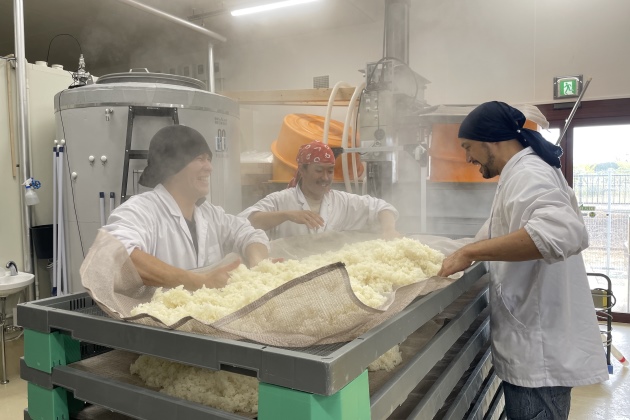
The constraint of using rice polished to just 90% also leads to innovation in koji-making.
“Unpolished rice doesn’t dissolve easily. If you follow textbook methods, the result becomes thin and lacking depth. But if you try to force it to dissolve, the flavor turns heavy and cloying. We experimented extensively to figure out what kind of koji would allow us to make sake that is neither thin nor overly rich. That process led us to a method that uses a powerful strain of koji mold while shortening the koji-making time.”
At Ine to Agave, the goal is to break down the rice effectively, so they use a strain of koji mold that is rarely employed in conventional sake brewing, applying it in quantities 10 to 20 times greater than those typically used for daiginjo sake. However, if this approach were combined with the standard koji-making duration of 48 hours or more, the resulting flavor would become too heavy. To balance the strength of the koji, the production time is instead shortened to around 40 hours.
Koji-making is the cornerstone of sake brewing. Okazumi points out that it is considered one of the most difficult processes because of the sheer number of variables involved—rice variety, polishing ratio, the type and amount of koji starter, and more.
“If you truly master koji-making, you might be able to adjust things even with a small amount of starter. But I don’t believe you can sprinkle it exactly the same way every single time. If the koji varies, the fermentation that follows will vary as well. What we pursued was a method that eliminates this variability and allows us to consistently produce high-quality koji. That’s how we arrived at our current approach.
In conventional koji-making, the temperature curve differs slightly every time, so brewers have to rely on their senses and physical intuition. That’s why night shifts are unavoidable, and why the process demands constant tension and focus. At Ine to Agave, however, the koji reaches its peak temperature at exactly the same time, every single batch.”
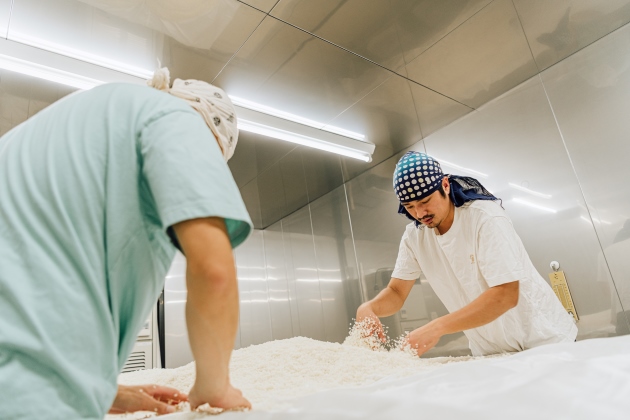
In traditional sake breweries, koji-making is regarded as such a high-skill task that it can take many years of training before a brewer is entrusted with tanekiri—sprinkling the koji starter. Yet, according to Okazumi, “At Ine to Agave, new employees can do tanekiri from their very first day.” By fully committing to a brewing approach optimized for low-polished rice, the team has developed a method that allows anyone to produce consistently high-quality koji.
While Okazumi is widely trusted as a brewer with strong convictions and a deeply inventive approach, the reality of running multiple ventures means he cannot always be physically present on the brewing floor.
“My commitment to brewing comes first. But as the business continues to grow, it’s essential that we can make high-quality sake even when I’m not there. Our strength lies in the ability to standardize quality while working within the constraint of a 90% polishing rate.”
The Significance of Craft Sake
Four Series Inspired by Earth, Wind, Thunder, and Stars
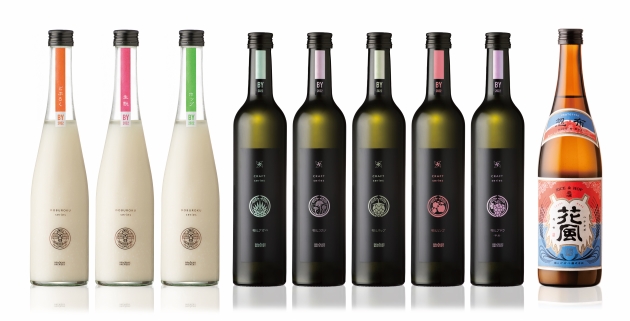
Ine to Agave’s product lineup is built around four themes inspired by Oga’s natural environment: Earth, Wind, Thunder, and Stars.
“Earth” represents doburoku—a traditional, unfiltered sake that has long been rooted in local communities as an everyday drink.
“Wind” refers to craft sake made by fermenting additional ingredients alongside rice, symbolizing the intention to bring a fresh breeze into the industry.
Named after one of Oga’s iconic natural phenomena, “Thunder” is a small-batch experimental series dedicated to bold, high-impact brewing challenges.
Finally, “Stars,” which historically guided fishermen as navigational markers, encompasses export-oriented sake and contract-brewed sake—both of which are closely tied to the licensing requirements for producing seishu (Japanese sake).
“Doburoku tends to carry a negative image—people often think it’s ‘hard to drink,’” Okazumi explains. “We’ve been making it since our days at Konohana Brewing, but from the very beginning our goal has been to create doburoku that even those who dislike it can find appealing at first sip. What we aim for is a ‘bright drink.’ By ‘bright,’ I mean clean and free of off-flavors, gently sweet but not cloying, and finished with a crisp acidity.”
To ensure consistency across all products, Ine to Agave grinds the rice grains, creating a smooth, milkshake-like texture that is light and easy to drink.
The flagship of the Craft Sake series is “Ine to Agave,” named after the brewery itself and brewed using agave syrup, the raw material for tequila, as a secondary ingredient. Because agave syrup is fully converted into alcohol by yeast, it does not directly influence the flavor, resulting in a drink that tastes very much like sake. This characteristic was initially seen as a strength. However, according to Okazumi, his thinking has begun to evolve in recent years: “If we’re adding a secondary ingredient, perhaps we should allow its individuality to come through more clearly.”
Hops: A Natural Encounter with Sake
To date, Ine to Agave has experimented with nearly twenty different secondary ingredients. Yet, as Okazumi emphasizes, “At our core, we want to make sake. That doesn’t mean adding just anything for the sake of novelty—there always has to be a reason.” Among all the ingredients explored so far, hops stand out as something that “seemed destined to meet rice.”
“I was genuinely surprised by how well hops pair with rice-based alcohol. Personally, I think they may even work better than with barley-based beer. Bitterness is a flavor that tends to be less acceptable in sake, but it is one of the five basic tastes and an important one. When that bitterness comes from hops, many people respond to it positively. It also expands food-pairing possibilities, and I see real potential in the range of flavors unique to hop-based sake.”
Products such as Ine to Hop and Hop Doburoku use blended hops, with Nelson Sauvin serving as a core variety. This hop contains 4MMP, a compound known for its muscat-like aroma—an aromatic note that has also drawn attention in the world of sake in recent years.
By fermenting grapes together with rice, Okazumi aims to create beverages more intriguing than either wine or sake alone. Likewise, fruits that cannot ferment into alcohol on their own can become sake through the power of rice and rice koji. Precisely because he is making something that resembles sake but is not sake, Okazumi continues to explore what makes Craft Sake meaningful.
“If an ingredient tastes better when turned into alcohol on its own, then it’s better not to interfere. The real appeal of Craft Sake lies in moments when adding a secondary ingredient allows you to create something that goes beyond what either component could achieve alone.”
Aiming for the Scale of Dassai
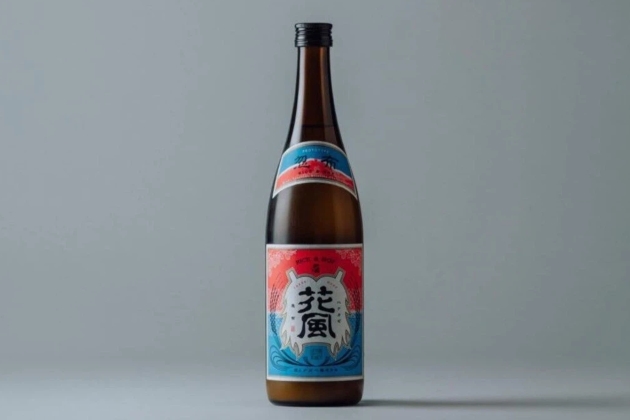
In February 2024, Ine to Agave launched a new brand, Hanakaze, with the goal of making Craft Sake more widely accessible. Because Craft Sake is typically produced in small batches, it often carries a higher price, making it difficult for restaurants to serve by the glass at a reasonable cost. Hanakaze was developed to address this challenge. By shortening the moromi fermentation period to roughly two-thirds of that used in other brews and enabling larger-scale production, the brewery achieved a retail price of around 2,100 yen (before tax) for a 720ml bottle.
For Craft Sake to gain broader recognition, Okazumi believes it must go beyond retail sales aimed at core fans and be suitable for wholesale distribution to restaurants—places where many people encounter it for the first time. Looking ahead, he has set an ambitious goal: to increase production tenfold within two years, making Craft Sake far easier to obtain.
“Going forward, I want to start hiring young brewers who could eventually become toji,” Okazumi says. “I don’t know how long I’ll be able to maintain a youthful sensibility myself, and if we don’t start training the next generation within the next decade or so, we risk being left behind by the times.”
Revitalizing a depopulating city by building a brewery-centered ecosystem. Exploring the possibilities of sake made from rice and rice koji to realize a freer future for brewing. Okazumi speaks openly of his determination: “I’ll keep pushing with everything I have until we become a producer on the scale of Kuro-kirishima, Dassai, or Yo-Ho Brewing.” It is perhaps because his gaze is directed not toward himself, but toward others—and toward a future in which he may no longer be present—that supporters continue to gather around him.
In November 2024, Ine to Agave entered its fourth year since founding. Once again, new ventures are launching and new products are taking shape at a rapid pace. With Okazumi declaring his intent to “build Oga’s future after I’m gone,” there is still a vast amount of work ahead for Ine to Agave—and no sign of slowing down.
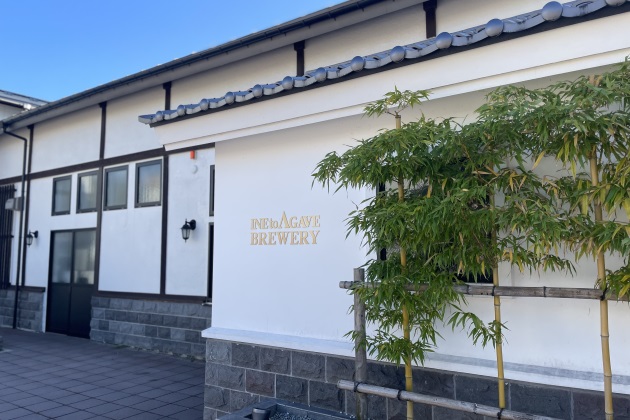
Brewery Information
Ine to Agave Brewery
Address: 1-21 Funakawa-Shinhamamachi, Funakawa Port, Oga City, Akita Prefecture, Japan
Contact: info@inetoagave.com
Founded: 2021年
Representative: Shuhei Okazumi
Website: https://inetoagave.com/
Pickup Articles


2019.01.18

2019.01.25
Trending Articles


Popular Articles
Recent Articles