2026.04
15
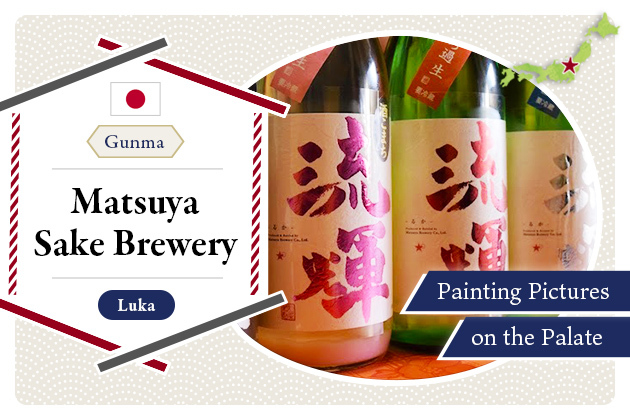
Painting Pictures on the Palate: How Fruity Sake ‘Luka’ Earned Gold After 15 Years — Matsuya Sake Brewery, Gunma
Located in Fujioka City, Gunma Prefecture, Matsuya Sake Brewery comes into view after a ten-minute drive from the Fujioka Interchange toward the town center.
Founded as a rice wholesaler during the Edo era (1603–1868), the business later transitioned into sake brewing in the late 19th century, as Japan underwent rapid modernization. Originally based in Toyama Prefecture, the company relocated to its current site in Fujioka in 1951, drawn by both its proximity to the Tokyo market and its abundant natural surroundings.
Today, Matsuya Sake Brewery has cultivated a strong following for its elegant, cleanly structured sake. Its lineup includes Luka, available exclusively through select distributors, as well as locally distributed labels such as Tosen, Hiraijo, and Miyako Hatsuyuki. Across the range, a hallmark style emerges—aromatic yet precise, with a refined clarity that resonates with contemporary drinkers.
In 2021, the brewery was awarded a Gold Prize at the Annual Japan Sake Awards for the first time in 17 years, marking a significant milestone in its history. We spoke with owner-brewer Hiroyuki Matsubara to trace the path that led to this achievement and to explore his vision for the future.
Defining a New Flagship: The Birth of Luka
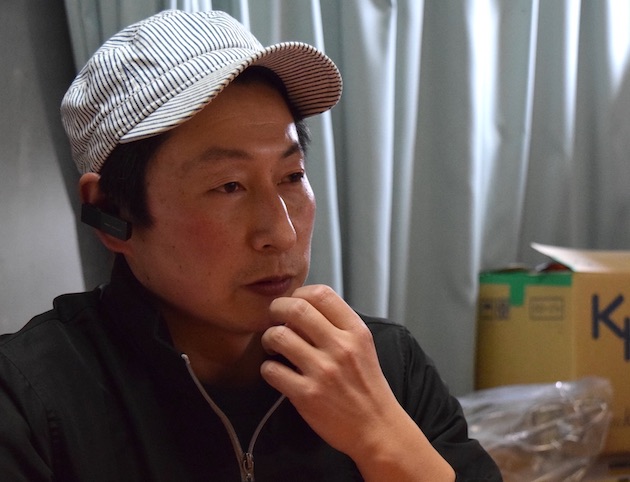
Matsubara grew up as the eldest son of the brewery’s owner. Although he had frequent exposure to sake from a young age—helping with koji-making during his student years, for instance—he recalls that he did not feel a strong personal interest at the time. After graduating from university, he joined an apparel company in Tokyo, pursuing a career entirely outside the world of sake.
“To be honest, I had no intention of going into sake brewing back then. My younger brother went on to study at Tokyo University of Agriculture, so I assumed he would eventually take over the family business. But he chose a different path and went into bread-making instead.
That left me as the only successor. At the same time, having spent time in a completely different industry, I began to see our family business from a new perspective. That was what ultimately sparked my interest and led me to return to the brewery.”
Matsubara returned to Matsuya Sake Brewery in 2006 at the age of 28. By that time, his father, Sanyu Matsubara, had already taken on the dual role of owner and toji (master brewer) in 1995, working alongside local employees to oversee production. The brewery had scaled down its output, shifting its focus toward small-batch, handcrafted sake with an emphasis on quality.
Even so, the situation was far from stable. “At the time, our sake wasn’t even carried by local retailers,” Matsubara recalls. “We made efforts to promote our products, but saw little result. It became clear that we needed to improve the quality itself.”
A turning point came through the advice of a senior brewer, who encouraged him to bring one of their labels, Hiraijo, to a well-regarded sake retailer in Tokyo. There, the shop owner offered candid feedback: “The potential is there. But with this profile, it will be difficult to gain wider traction. You should consider crafting a new label that places greater emphasis on aroma.”
“In fact, I had visited that shop once before, but I was too afraid of being rejected and left without showing the sake,” Matsubara admits with a laugh. “A few days later, I gathered my courage and went back. That’s when I was finally able to have them taste it.”
This exchange proved decisive. Building on the strengths of Hiraijo, Matsubara set out to develop a new label with a more expressive aromatic profile. The result was Luka, launched in 2008—now the flagship brand of Matsuya Sake Brewery.

The name Luka was originally one of the candidates Matsubara had considered for his child. It carries the dual meaning of “a sake that flows and shines,” as well as a deeply personal aspiration: to nurture it with the same care and devotion as one would a child. The bold calligraphy on the label was penned by Matsubara himself, embodying that sense of authorship and emotional investment.
Refining Quality Through Continuous Learning and External Feedback
Following its launch, Luka began to gain traction in the market, including being picked up by Koyama Shoten, a highly regarded sake retailer in Tama, Tokyo. From there, its reputation steadily grew. Even so, Matsubara continued to actively seek out feedback from a wide range of sources, approaching each opportunity with a willingness to learn and refine his craft.
At the Gunma Industrial Technology Center, he received technical guidance on koji and yeast, incorporating these insights directly into his brewing practices. He also made it a point to read every book recommended by senior brewers and to visit restaurants they suggested, immersing himself in environments where sake was deeply appreciated. Through these cumulative efforts, he steadily translated knowledge and experience into tangible improvements in quality.
These endeavors began to bear fruit in 2010, when the brewery received an award at the Annual Japan Sake Awards. In the years that followed, it continued to earn recognition at both the national competition and regional competitions in the Kanto-Shinetsu area. At tasting events hosted by Koyama Shoten, Luka achieved a second-place ranking in a popularity vote in 2012, followed by a series of consistently high placements in subsequent years.
Matsubara, however, reflects on these achievements with characteristic humility. “It has been more than a decade since Luka was first introduced and began trading with Koyama Shoten, yet they continue to carry our sake. I take that as a sign that we have met a certain standard, ” he says. Even so, his focus remains firmly on pursuing further improvements in quality.
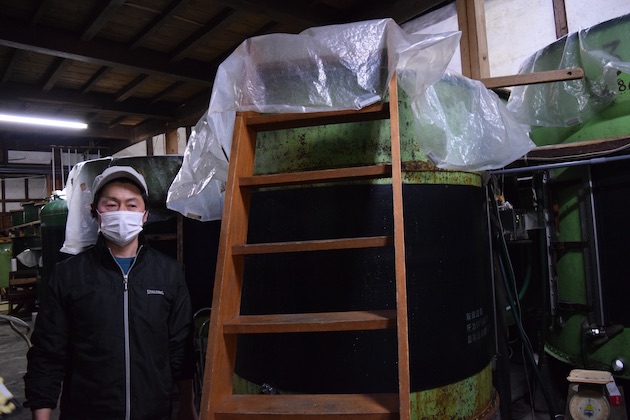
Defining a House Style Through Koji, Yeast, and Process Discipline
Originally conceived as a new label emphasizing aromatic expression, Luka has since evolved toward a more refined stylistic vision. Today, Matsubara describes the target profile as “a sake in which fruitiness paints a picture across the palate—clear, approachable, and effortlessly drinkable.” While this builds on the original concept, it reflects a deliberate shift toward greater precision. “In recent years, we’ve been consciously dialing back sweetness,” he notes, resulting in a balanced style that avoids excessive flamboyance or overt sweetness—one of Luka’s defining characteristics.
Central to achieving this profile is koji-making. For over 15 years, Matsuya Sake Brewery has consistently used a proprietary type of tane-koji (koji spores) —distinct from those more commonly adopted by other breweries in recent years—capable of producing both aromatic lift and depth of flavor across the full range, from honjozo to junmai daiginjo. Through this continuity, the brewery has established what Matsubara refers to as its own signature approach to koji.
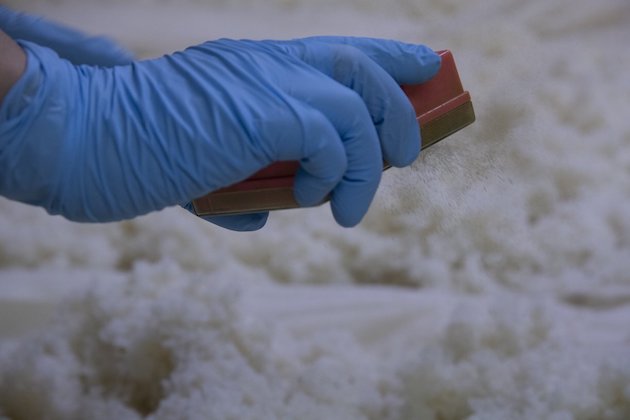
“This tane-koji is difficult to handle, particularly in terms of timing temperature control. But we’ve accumulated the know-how over many years, and being able to work with it effectively is one of Luka’s strengths.”
A similar philosophy applies to yeast selection. Rather than adopting newly developed strains designed to produce highly pronounced aromatics, Matsubara opts primarily for No. 10 lineage yeasts, maintaining a consistent house style that resists short-term trends.
“I believe rhythm is essential in sake brewing. We place great importance on daily routines—doing each task at a precise time, every day. By repeating the same processes, including making the same style of koji, we accumulate experience. And it’s from that repetition that new expressions can emerge.”
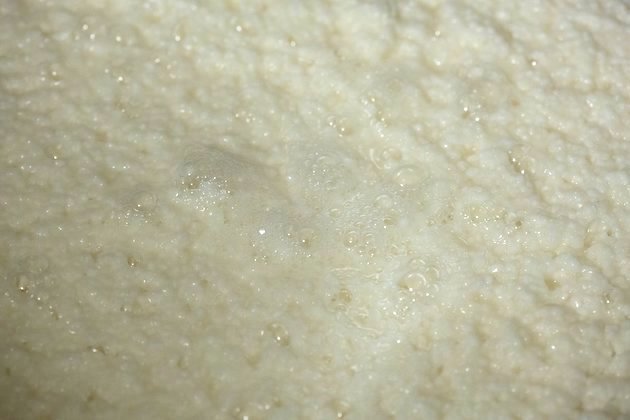
Another distinctive element of Matsuya Sake Brewery’s production is its use of a Yaegaki-style press, a piece of equipment dating back to 1973 and now used by only a handful of breweries nationwide. This press extracts sake slowly, yielding a notably gentle and soft texture. While it may not produce the same level of immediate freshness associated with more modern machinery, it allows for a supple, transparent profile. As a result, the entire brewing process is designed around this method of pressing.
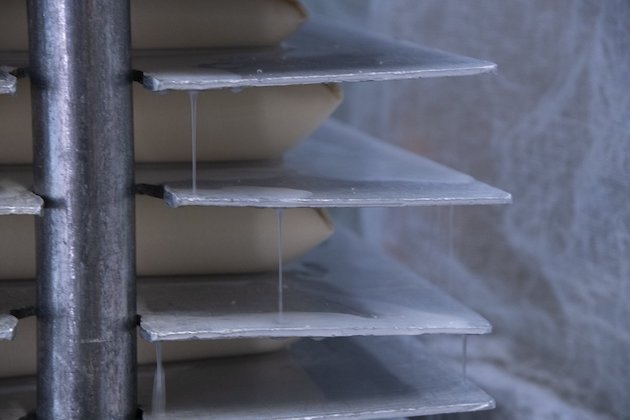
These practices extend beyond Luka to local labels such as Hiraijo, contributing to an overall elevation in quality across the brewery’s portfolio.
From Craft Refinement to Market Expansion
At the 2020 Annual Japan Sake Awards, Matsuya Sake Brewery was awarded a Gold Prize for the first time in 17 years. “Only now do I feel that my style as a brewer is beginning to take shape,” Matsubara reflects, signaling a growing confidence in the identity of his sake.
In recent years, the brewery has continued to pursue quality improvements—expanding its refrigerated storage facilities and shortening the lead time to pasteurization, among other initiatives. Yet when asked about his vision for the future, Matsubara emphasizes not only production, but also outreach.
“Since returning to the brewery, we have been fortunate to steadily increase production, and we intend to continue strengthening our output going forward.
At the same time, the COVID-19 pandemic made us acutely aware of how limited our ability to communicate had been. Precisely because of that experience, we want to enhance how we share our story—so that when sake distribution returns to previous levels, retailers and restaurants will find it easier to work with labels like Luka and Hiraijo.” Over the past 15 years, Matsubara’s steady, incremental efforts have elevated both the quality and reputation of Luka. With a renewed focus on the future, these ongoing initiatives suggest that the label may soon become an increasingly visible presence in the market.
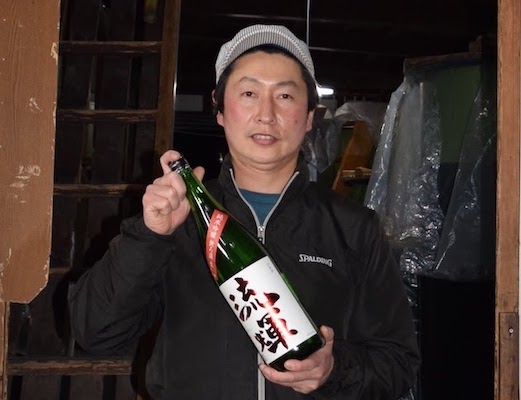
Brewery Information
Matsuya Sake Brewery
Address: 180 Otsu, Fujioka, Fujioka City, Gunma Prefecture, Japan
Phone: +81-274-22-0022
Founded: Late Meiji period (Company established: 1951)
President & Master Brewer: Hiroyuki Matsubara
Website: https://matsuya-sakebrewery.jp/
Pickup Articles


2019.01.18

2019.01.25
Trending Articles


Popular Articles
Recent Articles